
AI-generated illustration
3D printed parts are everywhere in this hobby now — rim holders, filter intake guards, feeding rings, lid clips, little brackets that solve one annoying problem. If you own a tank, you probably own a printed part, whether you know it or not.
So the question comes up a lot: what are these things made of, and does it actually matter?
Yes. It matters more than most people think, because a tank part has a harder life than almost anything else you print. It lives underwater or half-submerged, 24 hours a day, in warm water full of fish waste, for years — while holding up a plant that gets heavier every month. The wrong plastic will quietly give up on that job. The right one won't.
That right one, in my experience, is PETG.
What a Tank Demands From a Plastic
Before comparing filaments, it's worth saying what the job actually is:
Permanent submersion. Not "splash resistant." Sitting in water for years.
Warm water. Most tropical tanks run 74–80°F, day in and day out.
Fish chemistry. Ammonia, nitrate, minerals, the occasional medication — the water is not distilled.
Load. A rim holder starts out holding a cutting and ends up holding a top-heavy plant. A basket carries substrate plus a root ball.
Cleaning. Whatever grows on it — and something will — needs to scrub off without taking the part with it.
A plastic that handles any four of those but fails the fifth is a part you'll be replacing.
The Contenders, Honestly
PLA is where most people start printing, and it's a fine plastic — for dry things. But PLA is made to break down under the right conditions. Tank water is far cooler than a compost heap, so it happens slowly, but over months and years of constant submersion PLA takes on water, goes brittle, and loses strength. A PLA part above the waterline might last ages. A PLA part sitting in the tank is on a timer. Prototypes and desk toys: great. Permanent tank parts: not the pick.
ABS and ASA are strong, and ASA even handles UV well. But they warp while printing, they want an enclosure, and they give off styrene fumes while they print — not something I want to run in the same room as my tanks. Strong plastic, wrong tradeoffs for this job.
Resin prints look amazing — the detail is unreal. But uncured resin is genuinely toxic, and even fully cured resin prints aren't something most aquarists trust for long-term submersion. Beautiful for display pieces. Not what I'd put in a tank with shrimp in it.
Nylon and carbon-fiber blends are stronger than PETG on paper. They're also moisture-sensitive, harder to print well, and complete overkill for holding a pothos. You don't need a race car part to hold a plant.
Why PETG Wins
PETG is the balance point — the plastic that does everything well enough that nothing else beats it for tank duty:
It barely absorbs water. PETG takes on far less water than PLA. It holds its shape and strength submerged, month after month, year after year.
It handles warm tank water without blinking. Its softening point is far above anything your heater will ever do.
It's strong with a little give. PETG flexes slightly instead of snapping, which is exactly what you want in a clip holding a plant that keeps growing heavier. Brittle parts crack; PETG bends and holds.
It prints cleanly. No enclosure needed, minimal warping, no styrene cloud. That matters because a part that prints well is a part with good layer adhesion — and good layer adhesion is what keeps a submerged part from delaminating over time.
It needs no sealer. Some people coat prints to "waterproof" them, but a coating is often the weak link — it chips, it peels, and now you've got mystery flakes in the tank. PETG doesn't need the help.
It's widely regarded as fish-safe. PETG is the same base plastic family used for food and drink containers. One honest caveat: buy plain filament from a reputable brand. Mystery blends with unknown colorants and additives are a gamble no matter what the base plastic is.
Put together: safe in the water, strong under load, stable for years, and printable without drama. That's why it's the best choice — not because it's the strongest or the cheapest, but because it's the one with no weak spot for this job.
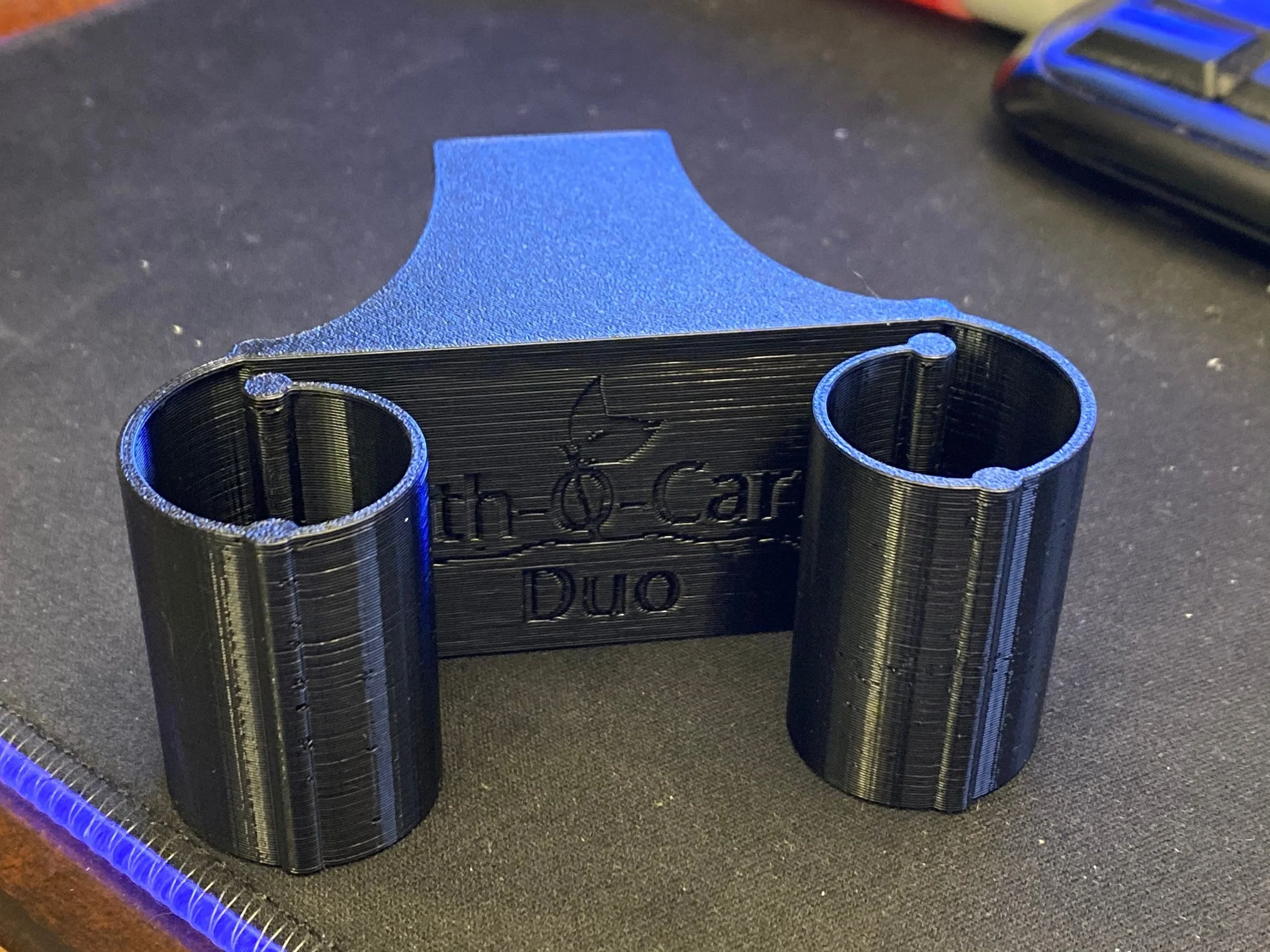
If You Print Your Own Parts
A few things I've learned that make the difference between a part that lasts and one that doesn't:
Dry your filament. A finished PETG part shrugs off water, but the raw filament still pulls enough moisture from the air to ruin a print — wet filament prints bubbly, weak parts. A dry box or a few hours in a filament dryer before a big print is worth it.
Print it solid where it counts. Walls and infill aren't the place to save plastic on a part that holds weight over water. A rim clip with two walls is a future failure; give it four or more.
Rinse before first use. A quick rinse gets any loose dust or debris off a fresh print before it meets your fish.
Expect biofilm, and don't fear it. Layer lines give algae and biofilm something to grip — that's normal on any printed part. It brushes right off PETG, and it's actually useful surface area for the bacteria doing your filtration's quiet work.
Don't paint tank parts. Paint is the weak link I mentioned — it will chip eventually, and chipped paint in a tank is worse than bare plastic ever was.
If You're Buying a Printed Part
Ask what it's printed in. That's it — that's the whole test. A seller who knows their material will tell you proudly. A seller who can't tell you, or who waves it off, is selling you a part they haven't thought about the way you should. And if the answer is PLA for something that will live underwater, now you know what to expect from it.
What This Means for Holders
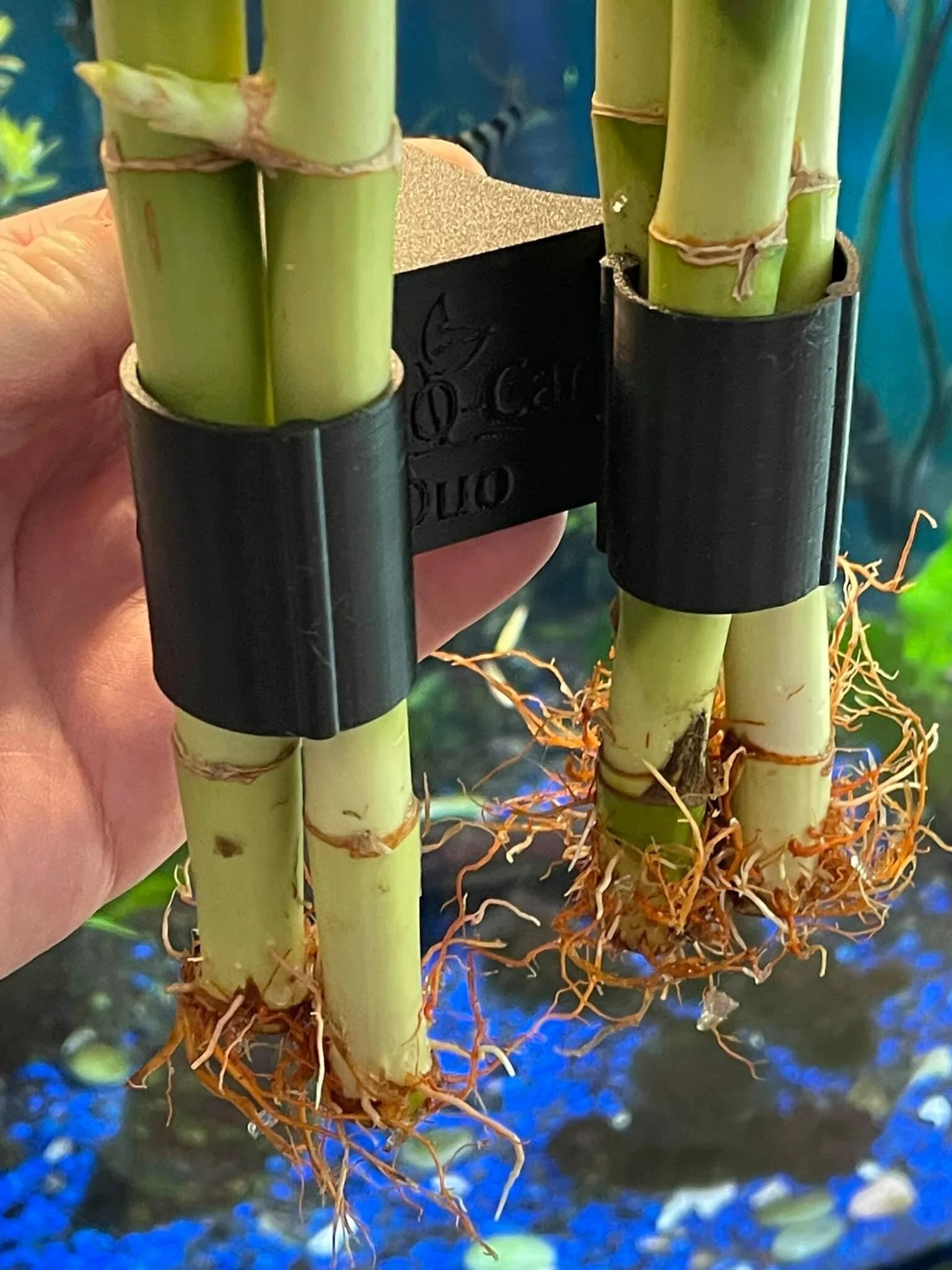
This is why the material matters so much for what we do. A rim holder or a basket lives half in and half out of the water for years, holding a plant that starts as a cutting and grows into something top-heavy. That's the hardest version of this job — constant moisture, constant load, constant chemistry. It's exactly the job PETG is built for, which is why it's the material I trust for parts that live on a tank.
If you're starting your rim garden with pothos — and you should, it's the easiest win in the hobby — our Poth-O-Carry® Original is the simple starting point, and the Versa line is where you go when a plant gets big enough to need substrate and ballast. I wrote a whole beginner's guide to the pothos side of it here: How to Grow Pothos in an Aquarium. And when you're ready for the full list of plants worth growing out of your tank, that's in Best Plants to Grow Out of Your Aquarium.
Frequently Asked Questions
Is PETG actually fish-safe?
Yes, as far as the hobby's collective experience goes — PETG is widely used for aquarium parts and is the same base plastic family as food containers. The caveats are the same as for any plastic: plain filament from a reputable brand, no mystery additives, rinse before first use.
Can I use PLA if the part stays above the waterline?
Honestly, yes — PLA's problem is long-term submersion in warm water. A dry clip above the rim, a lid handle, a cable guide: PLA is fine there. Just don't put it in the water and expect it to last forever.
Does PETG degrade in water over time?
Not in any timeframe that matters to a fish keeper. PETG doesn't hydrolyze the way PLA does. A well-printed PETG part in a tank should outlast your interest in rearranging the tank.
How do I clean a printed part?
Pull it out, brush it under tap water, put it back. Don't boil it, don't bleach-soak it for days — a brush and a rinse is all it needs. If a part ever cracks or feels brittle, replace it; that's true of any material.
What about resin prints in aquariums?
I'd skip them for anything submerged or in contact with tank water. The detail is tempting, but the toxicity questions around resin — cured or not — aren't settled enough for me to put one in with my fish and shrimp.